
No ice in the bin is one of the calls Bay Area Appliance Repair Service runs most often, on every brand from Samsung and LG to Whirlpool, GE and KitchenAid. Good news: a fair share of them are simple enough to rule out yourself in fifteen minutes. Past that point it’s part work, and that’s where guessing gets expensive.
Four Things to Rule Out First
Before you assume the worst, clear these. They cover a big slice of the no-ice calls.
The shut-off arm got flipped up. Most ice makers use a wire arm that rises to stop production when the bin fills. It gets knocked up all the time when someone digs through the freezer. Push it back down. If your unit uses a slide switch instead, confirm it’s on.
The filter is overdue. A choked filter starves the flow the ice maker needs. Most are rated for about six months. If you can’t remember your last swap, that’s your first suspect. Samsung and LG in particular get fussy with a tired filter.
The fill tube froze. The thin tube feeding the mold can freeze solid when the freezer runs too cold or airflow gets blocked. That stops water dead. A tube that keeps refreezing after a thaw isn’t the real problem, it’s a symptom of a temperature or seal issue that needs a look at the source.
The freezer drifted warm. Ice makers need the freezer near 0 to 5 F to harvest. If it’s crept to 15 or 20, the cycle never triggers. Check the setpoint, make sure the door seals, and clear anything blocking the vents.
Fix one of those and give it a full day before you judge it. The fill, freeze, harvest loop is slow.
Where It Turns Into a Part
Once the four checks come back clean, you’re into components. The ones we replace most:
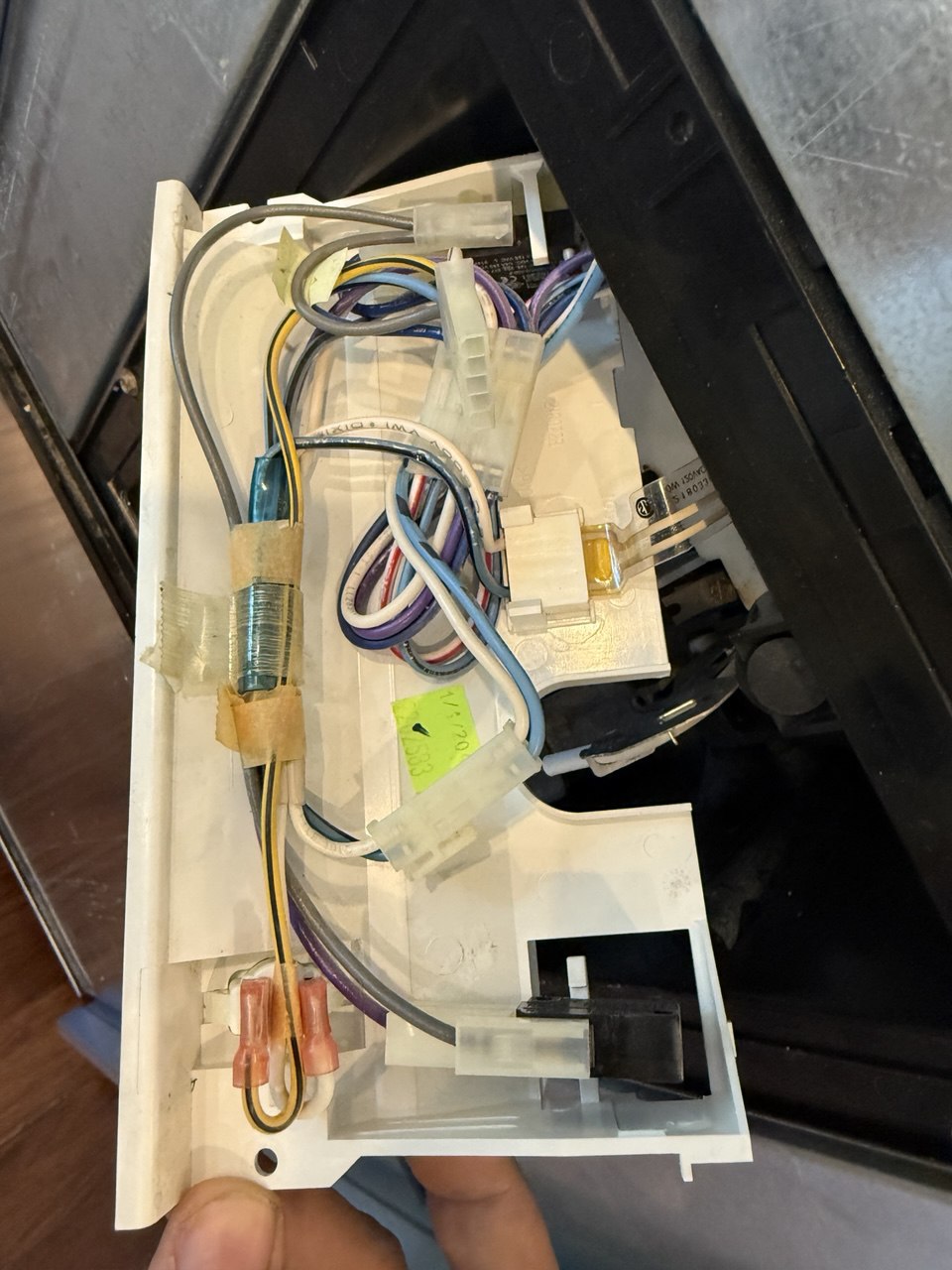
Water inlet valve. The electrically driven valve that lets water into the maker. When it goes, you get no fill, a weak fill, or a slow drip in the freezer. Testing it means reading voltage and resistance at the solenoid with a meter, safely.
Ice maker module. The module runs the harvest, kicks the cubes out, and calls for the next fill. A dead one makes nothing even with good water and good temps. Defined part, but reaching it means pulling the ice maker apart.
Thermostat or sensor. If the unit can’t confirm the ice froze, it never ejects. That shows up as no harvest, or as the maker dumping water in the tray before it sets.
Control board. Rare, and the last thing we look at, because it’s the priciest part and the least likely cause.
A Water Inlet Valve, On Camera
The Point Where a Tech Pays for Itself
Ran the four checks and still no ice after a day? The fault is electrical or mechanical now. Testing a valve means live voltage. Swapping a module means opening the cavity. Order the wrong part off a video and you’re out the money with the fridge still broken. We see that pattern weekly.
The diagnostic is $99, credited to the repair when you book it. After we find the fault you get the number in writing, then it’s your call. We cover the whole Bay Area and move fast, often same or next day.
On a specific brand? These go deeper: GE ice makers, Samsung ice makers, LG ice makers, and Frigidaire ice makers. For the whole appliance, our refrigeration repair page lists what we service.
Running a cafe or restaurant with a standalone commercial ice machine? That’s a different animal, and it’s handled by our sister brand rather than this everyday-appliance crew. If the same site also has an espresso machine or grinder that is acting up, commercial coffee machine repair is the right service line for that equipment.
Book It
Call (925) 999-4095 or email welcome@adriumservice.com. We’ve serviced Bay Area appliances since 2021. You can also book through our contact page.
FAQ
Why did my ice maker suddenly stop? Usually a frozen fill tube, the shut-off arm bumped up, an overdue filter, or a freezer running too warm. Check the arm and filter first.
How long before it works after a fix? Give it 12 to 24 hours. The fill, freeze, harvest loop is slow, and most fridges drop a fresh batch within a day.
Fix the module or replace the fridge? Under ten years old and otherwise healthy, fixing just the ice maker is almost always the smarter money.