
The compressor is the pump that drives your refrigerator. It pushes refrigerant through the sealed system and pulls heat out of the box. When it weakens, cooling drops off and the food starts its slow slide toward the trash. Most of the fridges we see with this problem are the everyday ones: a Samsung French-door, an LG side-by-side, a Whirlpool or GE top-freezer. Here’s what the repair runs, how to catch a failing compressor early, and the rule we use to decide whether it’s worth your money.
What the fix runs
“Compressor repair” covers a few different failures, so the range is wide.
-
Start relay or capacitor: $150 to $300. The compressor’s fine; the small device that kicks it on has quit. Cheapest and most common.
-
Sealed-system leak repair and recharge: $500 to $1,000. Refrigerant has leaked out, usually at a joint or the evaporator. We find the leak, fix it, vacuum the system, and recharge.
-
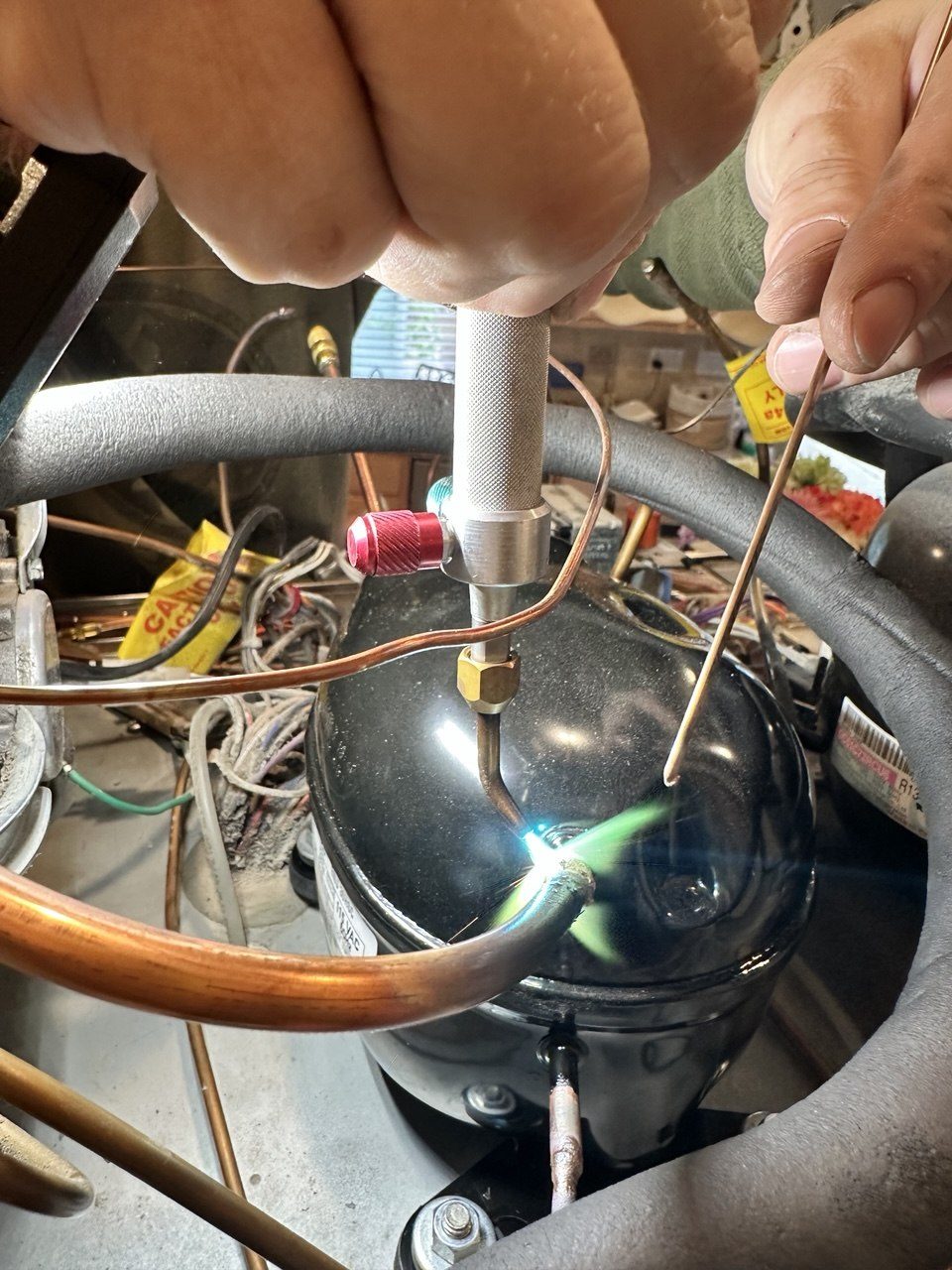
Full compressor replacement: $700 to $1,200 on a mainstream brand. The pump is dead, gets cut out and brazed in new, then the system is recharged.
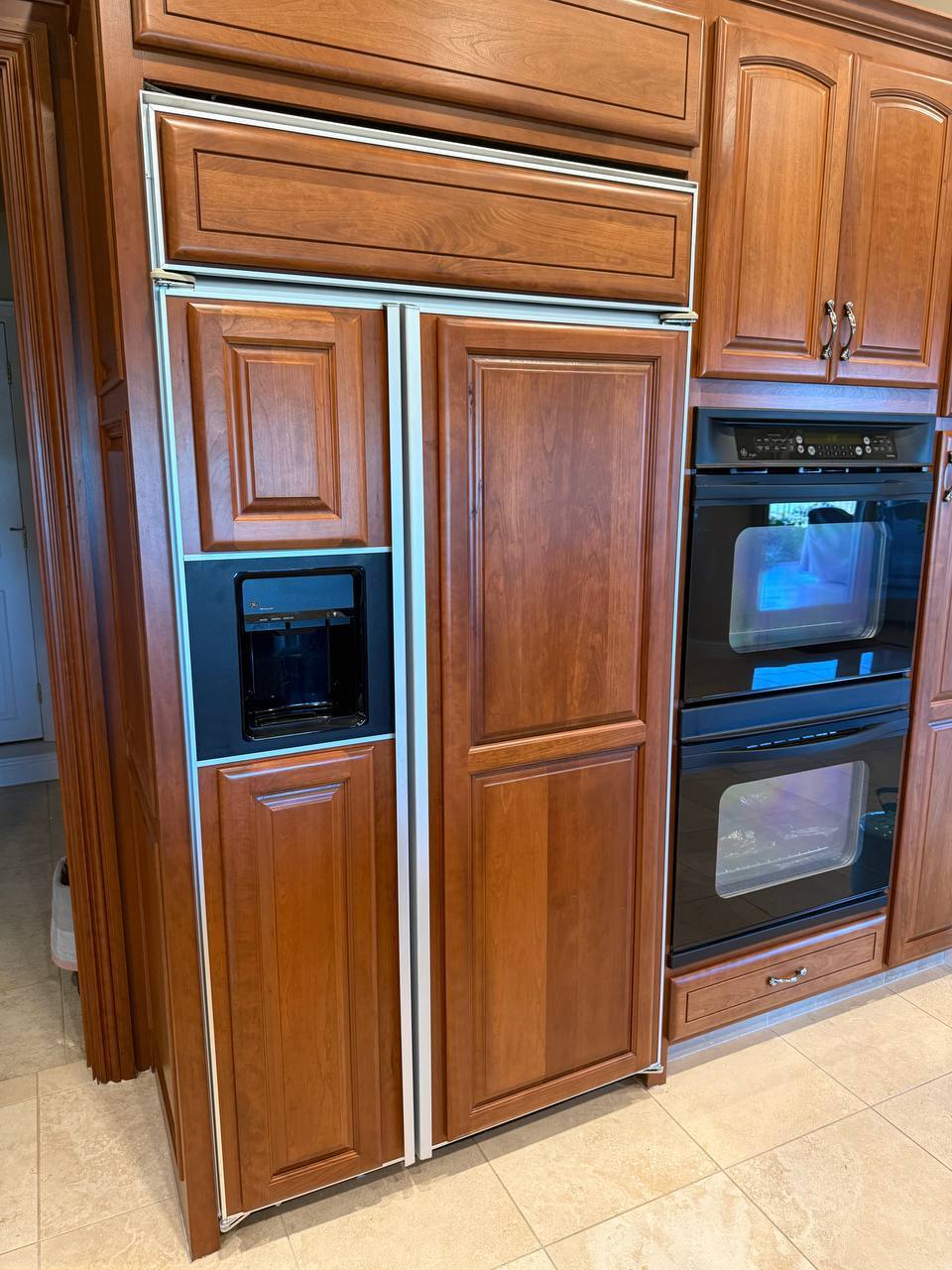
Premium built-in units run higher. The labor rate is the same as any call; the OEM part and the tighter access drive the difference. That’s the exception, not the headline.
How a dying compressor shows itself
You rarely get one clean symptom. Watch for a combination:
-
Warm box, constant hum. The compressor runs nonstop and never cycles off, yet the fridge stays warm. The pump is turning but can’t build pressure.
-
Click every few minutes. That’s the overload relay tripping as the compressor tries and fails to start.
-
Hot at the back. Some warmth is normal. Too hot to keep your hand on it means it’s straining.
-
Freezer holds, fridge climbs. On many units a weak sealed system shows up first in the fresh-food side.
-
Dead silence. No hum, no startup attempt. The compressor or its start circuit is open.
Two or more of these and it’s time to stop troubleshooting and get a diagnostic. Running a dying compressor won’t save it.
Rule out the cheap stuff first
Before you call, knock out the easy ones:
- Pull the fridge out and vacuum the condenser coils underneath or behind. Caked dust makes the compressor run hot and mimic failure.
- Confirm the condenser fan spins. A seized fan cooks the compressor.
- Make sure there’s clearance around the unit and the vents aren’t blocked.
Clean coils and a working fan sometimes bring a “failing” fridge back. If it’s still warm after that, the sealed system needs a pro.
Fix it or replace it
Sealed-system work is EPA-regulated and not DIY, so the math matters. How we call it:
- Repair if the fridge is under 8 years old and the price comes in under half of a comparable new unit.
- Replace if it’s past 10 years on a mainstream brand and the fix runs $700 or more, or it’s the second major failure inside a year.
For the full framework across all appliances, see our repair-or-replace guide. If your fridge stopped cooling but you’re not sure it’s the compressor, the not-cooling walkthrough covers the whole list.
Book a diagnostic
Compressor and sealed-system repair is licensed, EPA-certified work. Bay Area Appliance Repair Service holds CSLB #1136642, BEAR #50788, and EPA #1279674151528, and we run out of San Ramon across the Bay Area. We diagnose the failure, look up the OEM part cost, and give you a written repair-or-replace call and price after the $99 diagnostic, credited to the repair. No brazing or recharge happens until you approve it.
Call (925) 999-4095 or email welcome@adriumservice.com. More on our refrigeration repair service page.
What a compressor job looks like
FAQ
How much does refrigerator compressor repair cost? $400 to $1,200 on mainstream brands. A relay or capacitor swap is cheaper, around $150 to $300.
What’s the most common sign of a bad compressor? A warm fridge with a compressor that hums constantly and never cycles off, often with a click from the relay.
Repair or replace? Replace if the fridge is past 10 years and the fix tops $700, or the repair exceeds half the cost of a new unit. Otherwise repair usually wins.