
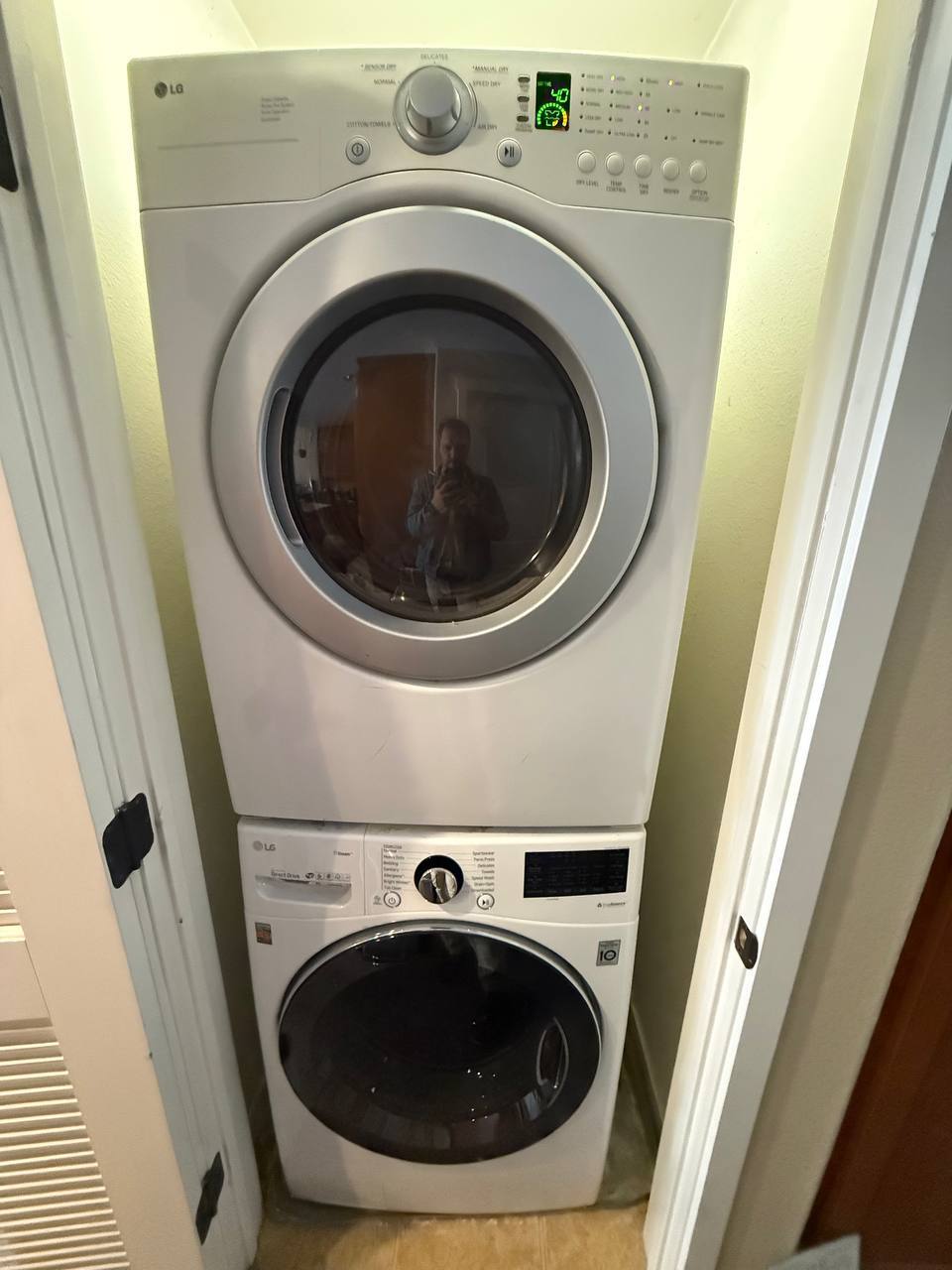
Standing water in the drum when the cycle ends is one of the most common laundry calls we run across the Bay Area. Three things cause nearly all of them: a clogged pump filter, a kinked or blocked drain hose, or a worn-out pump. The first two you can sort in ten minutes. The third is a part swap that’s worth doing right.
This one’s about the no-drain symptom specifically. For the wider picture, the washer and dryer repair guide covers bearings, boards, and couplers too.
Empty the tub before you diagnose
Get the water out first so you’re not working around a flooded machine. Unplug it. On a front-loader, open the small panel at the lower-right front, lay towels down, and back the round filter out slowly to let water drain into a pan. On a top-loader, drop the drain hose end into a bucket set below the water line and let gravity pull it.
First suspect: the pump filter
The filter (the coin trap) catches coins, hairpins, and lint balls. Packed full, water never reaches the pump impeller. This is the single most common cause of a no-drain. Fully unscrew it, pull it, clear the debris, rinse it under the tap, and reseat it firmly so it won’t weep. Run a rinse-and-spin. If draining’s back, you’re done. If water still sits, move to the hose.
Second suspect: the drain hose
The hose runs from the pump to the standpipe or laundry sink. It kinks when the machine gets shoved to the wall, or it sludges up with lint and detergent. Pull the machine out, straighten any kink, and while you’re back there confirm the standpipe itself isn’t backed up. A clogged house drain fakes a washer fault perfectly, and no pump work fixes a blocked standpipe.
Filter and hose both clear? You’re past the homeowner checklist.
When the pump itself is done
If the basics check out and water still sits, the pump’s the likely cause. Listen during the drain step. A pump that hums or buzzes but moves nothing has a jammed impeller or a worn motor. A pump that goes dead silent lost power, from a failed motor or a wiring fault. A burnt smell means replacement.
LG and Samsung front-loaders share the same drain pump, so here’s a quick field test: spin the impeller by hand. A healthy pump resists a little from the motor’s magnet drag. A dead one spins loose and free with no resistance, and that free spin means it can’t move water even when the part looks fine. The clip below shows a bad one next to a good one.
Replacing the pump is a pro job. It seats against a housing and gasket, and if it isn’t seated and clamped exactly right it leaks onto the floor on the very next cycle. Do it wrong and you’ve bought a second service call and a wet floor. A tech who does it every week gets it done clean.
Call us
If the filter and hose are clear and the pump still won’t move water, or you hear buzzing, smell burning, or get a drain code after the basics, give us a call. Those point past a clog to the pump motor, the drain sensor, or wiring, and none of those are safe to guess at.
We service every major laundry brand across the Bay Area. See our laundry repair page, or the GE washer job notes from Alamo for a real drain diagnosis.
Bay Area Appliance Repair Service has run appliance repair here since 2021. CSLB #1136642, BEAR #50788, EPA #1279674151528, BBB A+. The $99 diagnostic is credited to the repair when you book it, and you get the price in writing once we’ve found the fault.
Water in the drum? Call or text (925) 999-4095, or email welcome@adriumservice.com. We’ll get you on the schedule fast, often same or next day. You can also reach us through the contact page.
FAQ
Why is my washer not draining but spin still works? The wash motor is fine and the problem is downstream. Check the pump filter, then the drain hose, then the pump itself.
Where is the drain pump filter? On most front-loaders it sits behind a small panel at the lower-right front. Lay towels down first, since the tub can dump a gallon or more.
Should I keep running cycles to force it through? No. Running against a blockage overheats the pump and shortens its life. Drain it manually and clear the clog first.