GE is in more Bay Area kitchens and laundry rooms than almost any other name. Most of what we get called for isn’t exotic. It’s a fridge that quit cooling, a dishwasher that won’t drain, a dryer that runs cold, a range burner that clicks but won’t light. Here’s what actually fails on GE, roughly what the parts run, and when it’s worth fixing versus replacing.
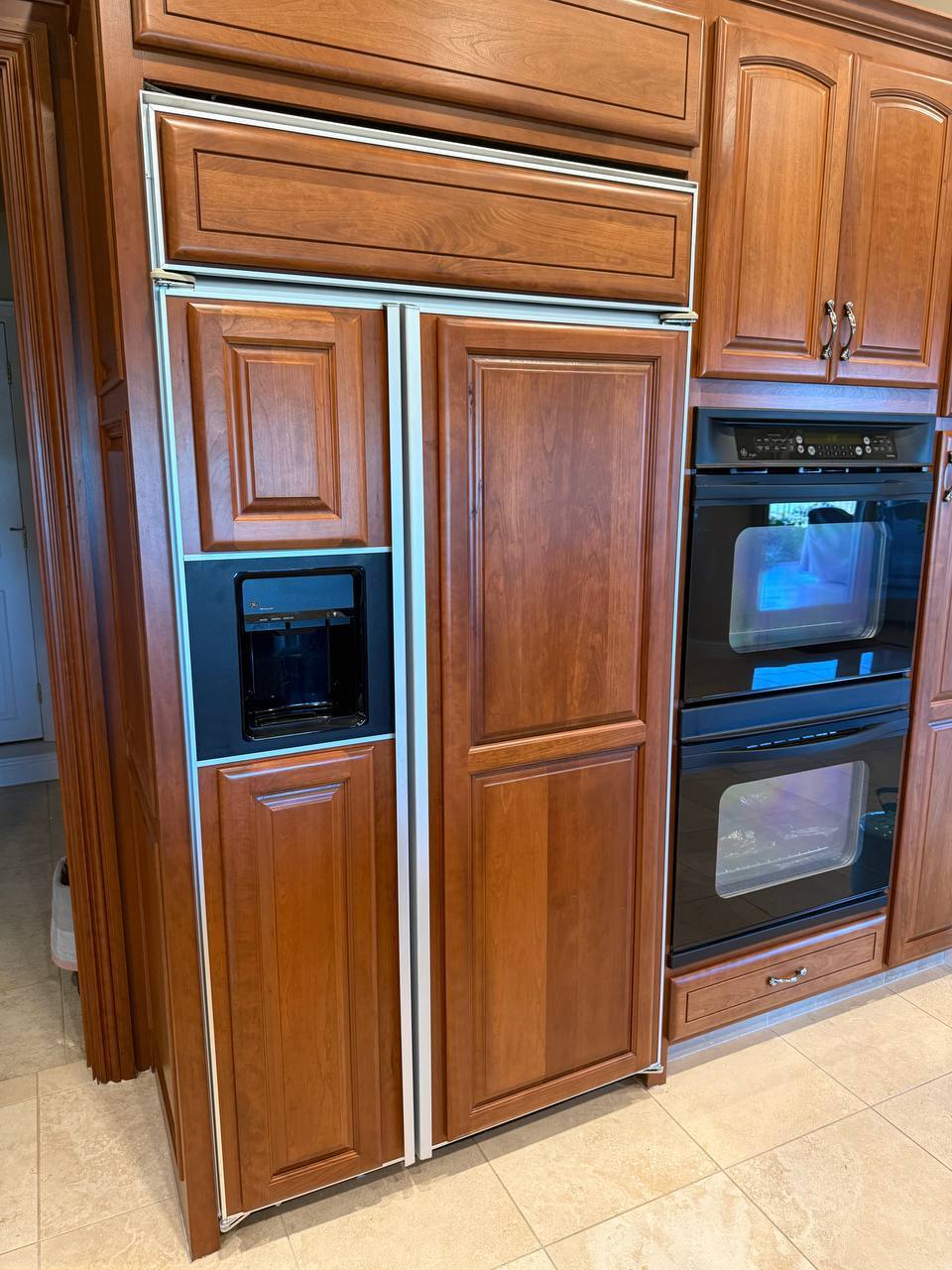
GE refrigerators: not cooling, no ice, water on the floor
The single most common GE fridge call is a warm fresh-food section with a freezer that still works. On GE bottom-freezers and French-doors that usually points to the defrost system: a failed defrost heater or a defrost thermostat, roughly $60 to $180 in parts. If the whole box is warm, it’s more often the evaporator fan motor or the sealed system.
Ice makers are their own headache on GE. A frozen fill tube, a tired inlet valve, or a dead module covers most of it. The module runs about $90 to $200. Water pooling under the fridge is usually the drain tube icing up at the back of the freezer, a repeat problem worth fixing at the source rather than mopping every week.
GE dishwashers: won’t drain, won’t fill, leaves grit
Standing water after a cycle is a drain fault: a clogged sump filter, a kinked drain hose, or a failed drain pump. Pull the bottom rack and clear the filter first, that one’s free. If it still sits, the pump is the likely part. A dishwasher that won’t fill often throws a code (GE uses H2O for a fill timeout) and comes down to water pressure, a clogged inlet screen, or the inlet valve. Dishes coming out gritty usually means spray-arm holes clogged or a wash-pump issue.
GE washers and dryers
On GE front-loaders the top no-drain call is the coin-trap filter and the drain pump. On top-loaders it’s more often the lid switch or the drive system. Dryers that run but won’t heat are almost always a blown heating element or thermal fuse, $40 to $150 in parts, and on gas models a bad igniter or flame sensor. A dryer that won’t tumble is usually the belt.
GE ranges and ovens
A gas burner that clicks but won’t light is usually moisture under the cap or a dirty igniter port, both owner-fixable. If bake won’t heat but broil does, suspect the bake element or the control relay. An oven that cooks off temperature is almost always a drifted temperature sensor, a quick swap once a tech confirms it with a meter.
Repair or replace
Rough rule: if the repair runs less than half the price of a comparable new unit and the appliance is under about ten years old, fix it. A $250 dishwasher pump on a five-year-old machine is easy math. A sealed-system compressor job on a twelve-year-old fridge, less so, and we’ll tell you that straight rather than sell you a repair that doesn’t pay off.
We service the full GE range across the Bay Area, standard GE plus the Profile, Cafe, and Monogram lines. Tell us what’s broken and we’ll schedule a visit. The $99 diagnostic is credited toward the repair.