GE french door refrigerator icing up in Millbrae
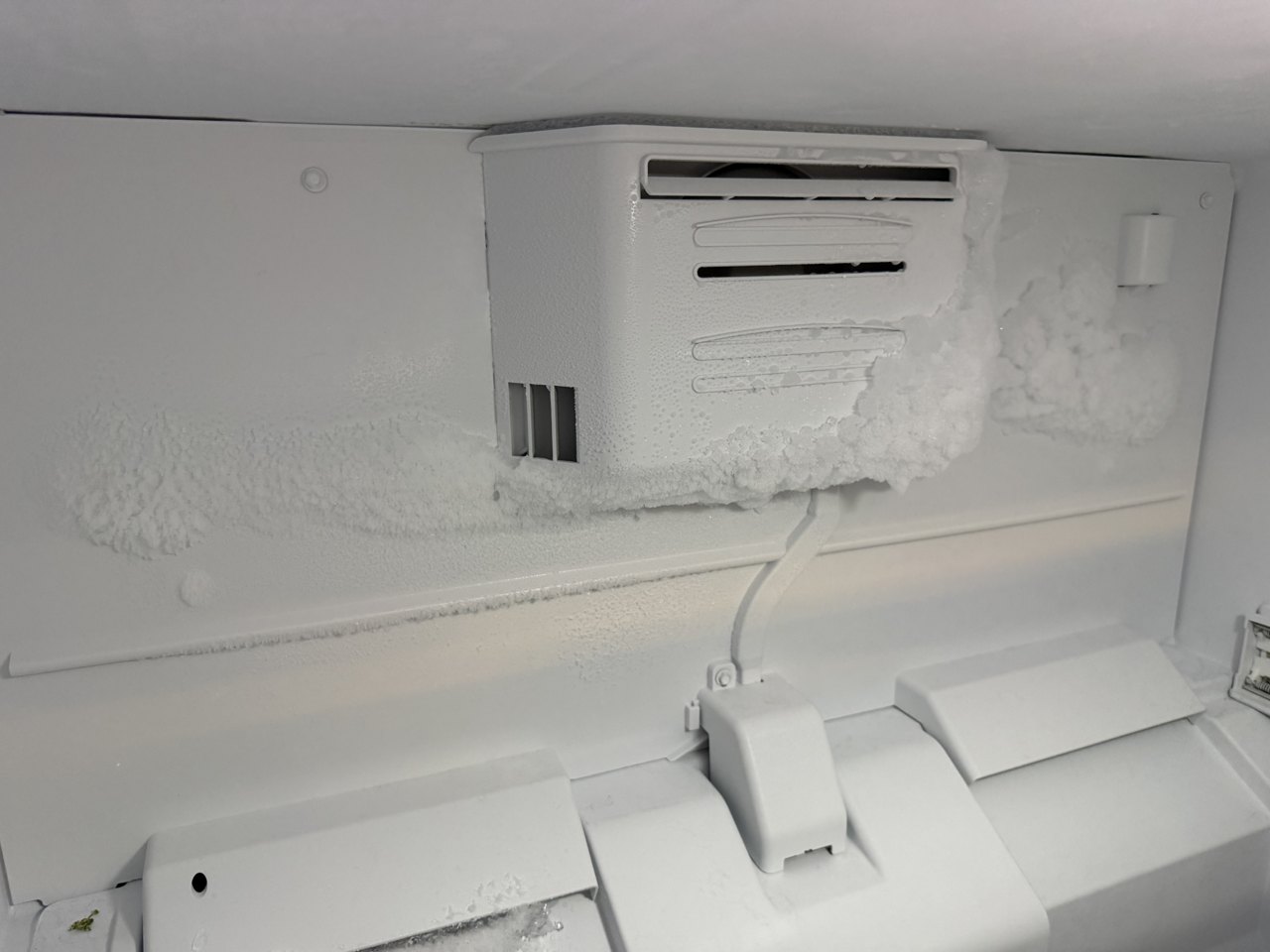
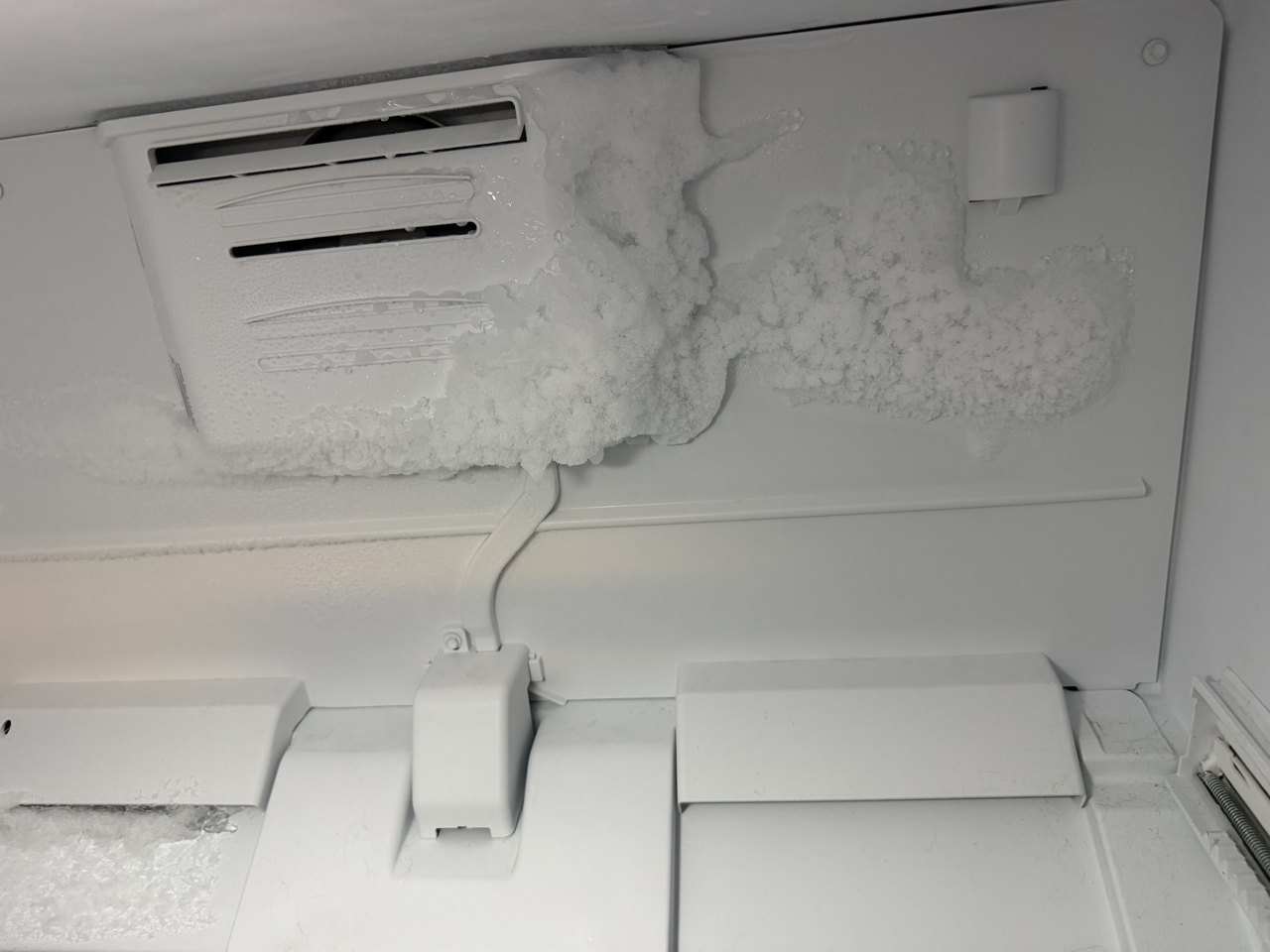
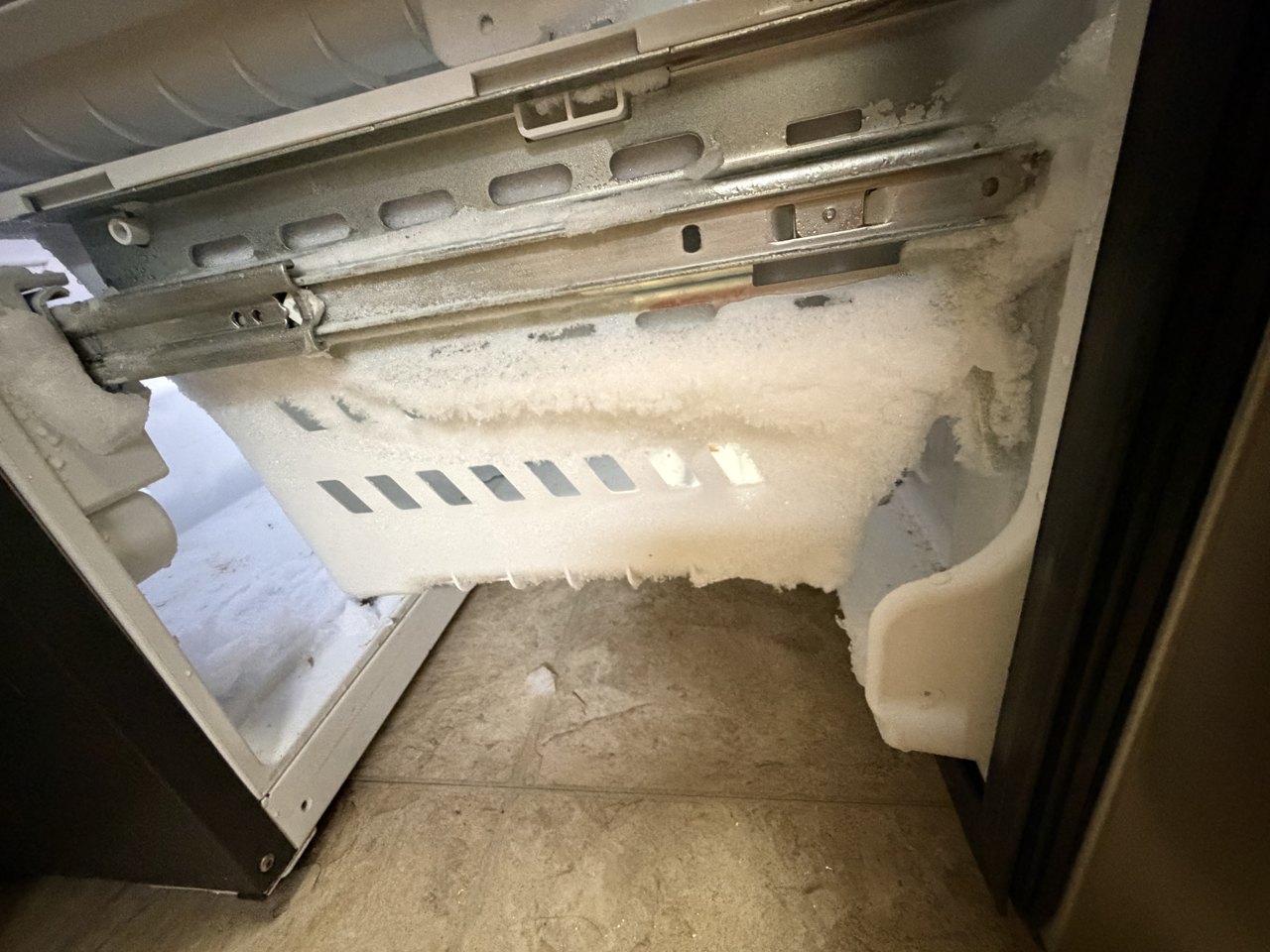
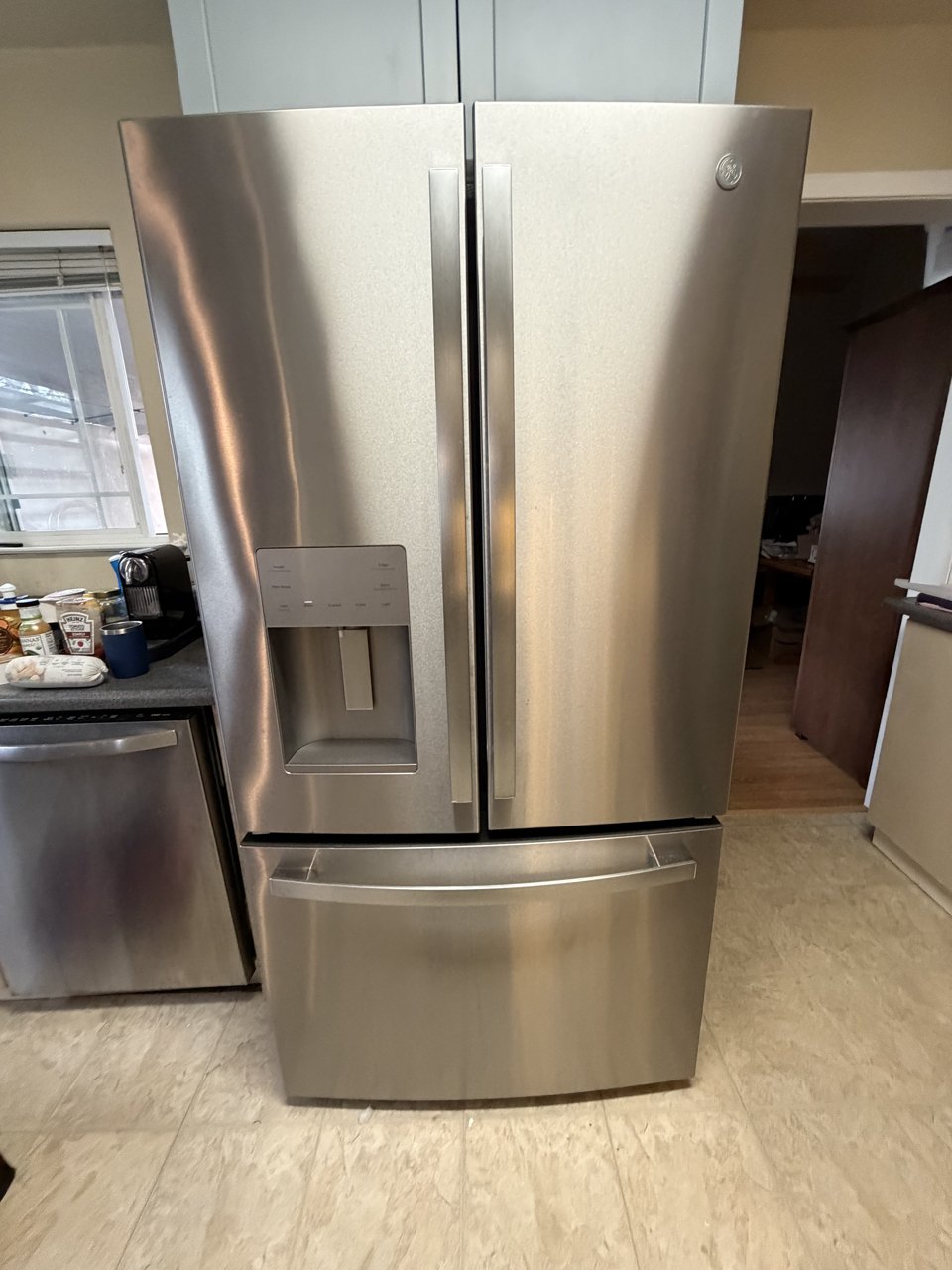
Problem: The owners of a GE french door refrigerator, model GFE26JYMNFFS, called us because the ice maker and the freezer were “over-icing.” That was an understatement. When our technician pulled the bottom freezer drawer, there was a thick crust of frost across the back wall, a snowdrift wrapped around the air vent housing where the evaporator fan blows into the compartment, frost packed around the ice maker fill area, and a layer of ice riding along the drawer slides. Water and slush had collected at the bottom lip of the freezer opening.
Diagnostics: Frost like this does not come from the sealed system. It comes from moisture. Every time warm room air gets into the freezer, its humidity freezes onto the coldest surfaces first, which is exactly where we found it: the fan housing, the back wall and the ice maker. Ice on the drawer rails and slush at the front lip pointed to the freezer drawer itself not sealing all the way, and once frost builds up behind the drawer it gets harder to close, so the problem feeds on itself.
Solution: Our technician emptied and defrosted the freezer compartment, cleared the ice off the air vent housing so the fan could move air again, cleaned out the ice maker area and the drawer rails, and checked the freezer drawer gasket and alignment so the drawer closes flush on all four sides.
Result: The freezer went back to a dry, frost-free compartment with the fan blowing clear and the ice maker free to cycle. The owners know what to watch for now: a drawer that does not quite close, or a little frost showing up around the vent, is the early sign to call before it turns into another snowdrift.
Frost inside a french door freezer is one of the most common calls we get on GE, Samsung and LG bottom-freezer models. If your freezer is icing up, the ice maker is freezing solid, or the drawer is getting hard to shut, we service GE refrigerators across Millbrae and the Peninsula.